How to improve road repair efficiency through fast, low-carbon, and durable maintenance methods,under Extreme Climate Conditions
Historically, traditional pavement M&R approaches have struggled to balance operational efficiency with long-term performance. Conventional pothole fixing using cold-mix asphalt mixture is a fast process, but yields poor durability and subpar surface smoothness. Conversely, preventive maintenance techniques like hot-mix patching and slurry seals offer good durability, but they are costlier, more labor-intensive, and require longer construction times. Because pavement M&R routine is a continuous necessity, these inefficiencies contribute heavily to cumulative carbon emissions, making the reduction of CO2 a critical priority under concerns of climate change.
Research Background
1. Climate Change and Carbon Emission Challenges
- Pavement maintenance is a continuous and high-frequency activity, contributing significantly to cumulative carbon emissions.
- Reducing CO₂ emissions has become a critical issue under global climate change.
2.Increasing Pavement Deterioration and Potholes
- Conventional maintenance and rehabilitation methods are ineffective in preventing recurrence.
- Pothole occurrence continues to increase in THB highways.
3. Maintenance and Rehabilitation (M&R)
- Conventional M&R: FAST, but poor in quality and durability.
- Preventive maintenance: DURABLE, but costly and less efficient.
4. Sustainability and Resource Constraints
- With increasing pothole occurrences and limited resources, a low-carbon technique to fix potholes has become a key challenge.
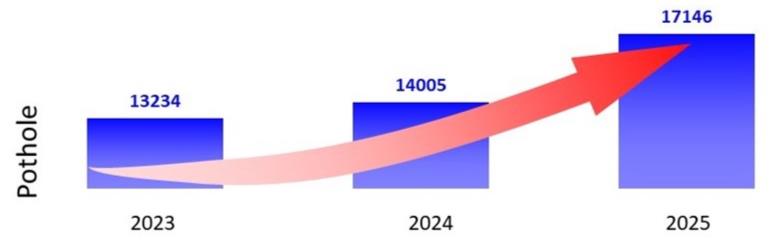 Picture1 Potholes from 2023 to 2025
Over 10 Years of Development and Achievements
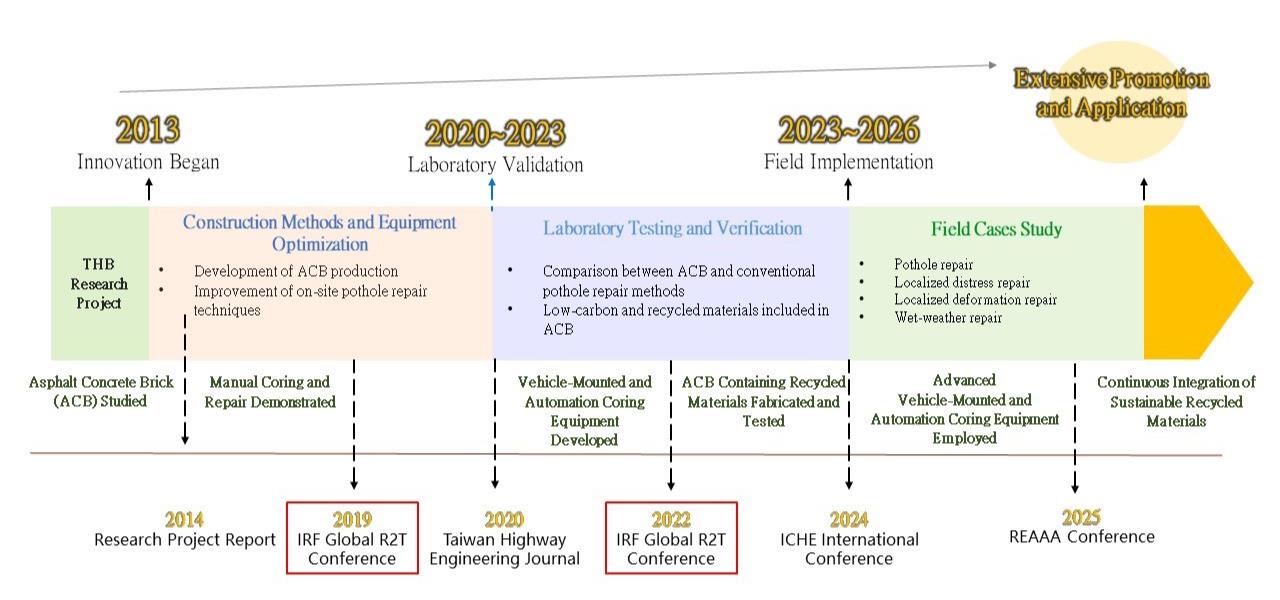 Picture2 Research Timeline
Highlighted Publications
Table1 Article Publication Compilation
| No. | Title | Journal / Conference |
|---|
| 1 | Application of Asphalt Concrete Brick in Road Engineering | 2014 Highway Bureau Research Project Report |
| 2 | Laboratory evaluation of asphalt concrete bricks containing basic oxygen furnaces | 2019 IRF Global R2T Conference & Exhibition |
| 3 | Performance Evaluation of Asphalt Concrete Bricks | 2020 Taiwan Highway Engineering, Vol. 46, No. 9. |
| 4 | Development of installing asphalt concrete bricks in conjunction with automatic pothole fixer | 2022 IRF Global R2T Conference & Exhibition |
| 5 | Analyzing the Benefits of Improving Sustainability in Provincial Highways through Preventive Maintenance Techniques | 2024 ICHE International Conference |
| 6 | Comprehensive Advancement of Asphalt Concrete Brick Technology for Sustainable and Efficient Pavement Repair | REAAA Conference 2025 |
| 7 | Application of RFID Technology in Quality Management of Cement Concrete and Asphalt Concrete Testing and Inspection | REAAA Conference 2025 |
 Picture3 Photos of Research Presentation
Asphalt Concrete Brick Production Process
The production of Asphalt Concrete Brick (ACB) begins with a flexible mix design that utilizes the original pavement material to ensure optimal bonding and strength. In Step 1, the heated asphalt mixture is placed into a mold and manually compacted 25 times. The process then transitions to a fully automated, one-click system for large-scale production; the testing machine performs the first-side compression (Step 2), automatically flips the specimen (Step 3), and executes the second-side compression to ensure uniform density (Step 4). Finally, after a proper curing period, the finished ACBs are demolded and removed (Step 5).The development of automated ACB production system was also employed to mass producing standard ACB for the needs of field implementation.
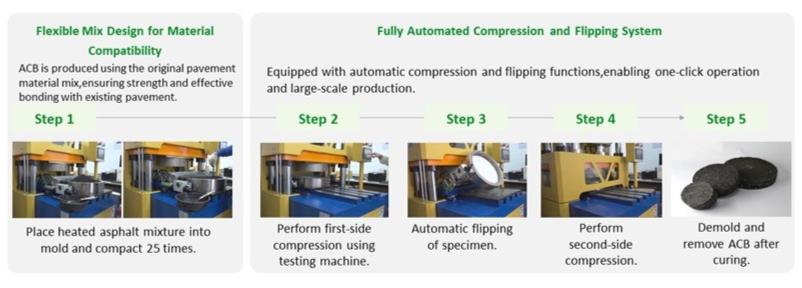 Picture4 Asphalt Concrete Brick Production Process chart
Key Advantages Of Asphalt Concrete Brick
Analyzing the advantages and disadvantages of existing pothole repair methods, an innovative low-carbon method for asphalt concrete brick repair is proposed, which achieves the advantages of various methods and improves repair effectiveness.
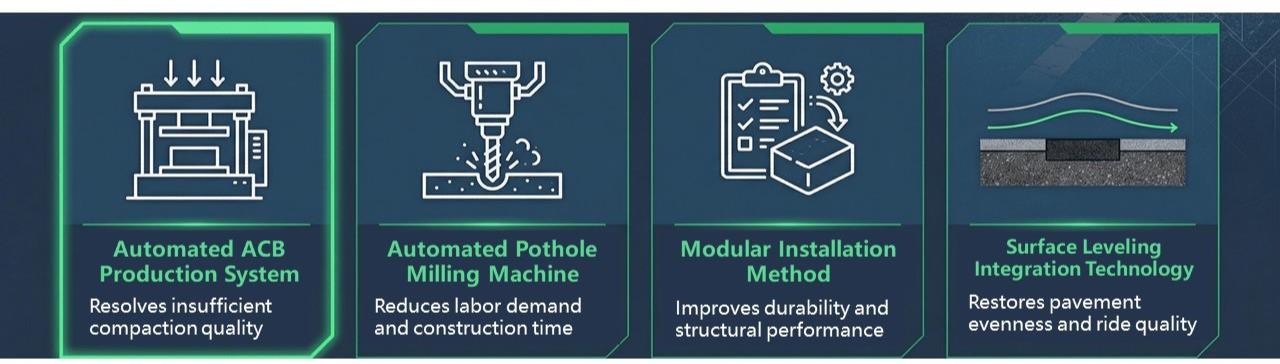 Picture5 Key Advantages of Asphalt Concrete Bricks
ACB came out of the automated ACB production system was compared with those produced by the regular Marshall compactor.
Evaluation of different ACB production specimens using the Hamburg wheel tracking test to determine the optimal production method.
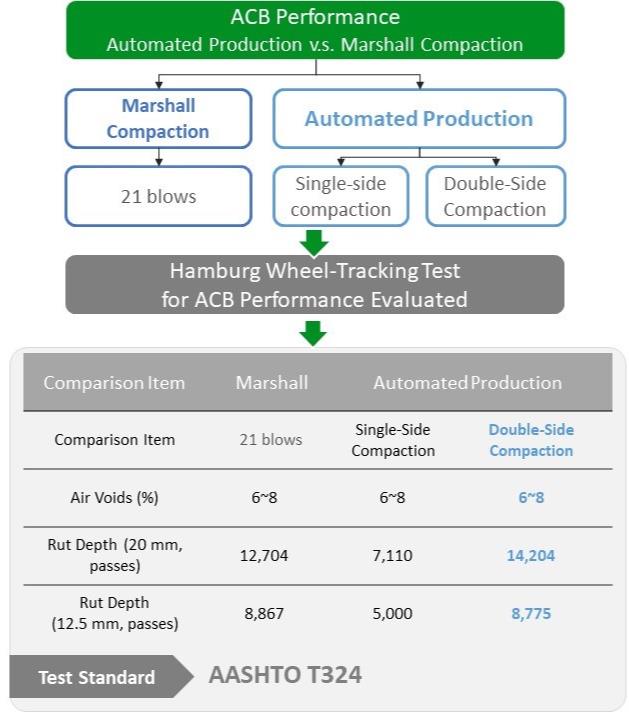 Picture6 Comparison: Automated System vs. Marshall Compactor
Conventional Manual Coring and Patching
took longer time (13-min) and labor intensive (up to 3 personnel) for manual coring and repair tasks, even with ACB. Consequently, leveling bonding materials and automated coring asset were suggested to investigate.
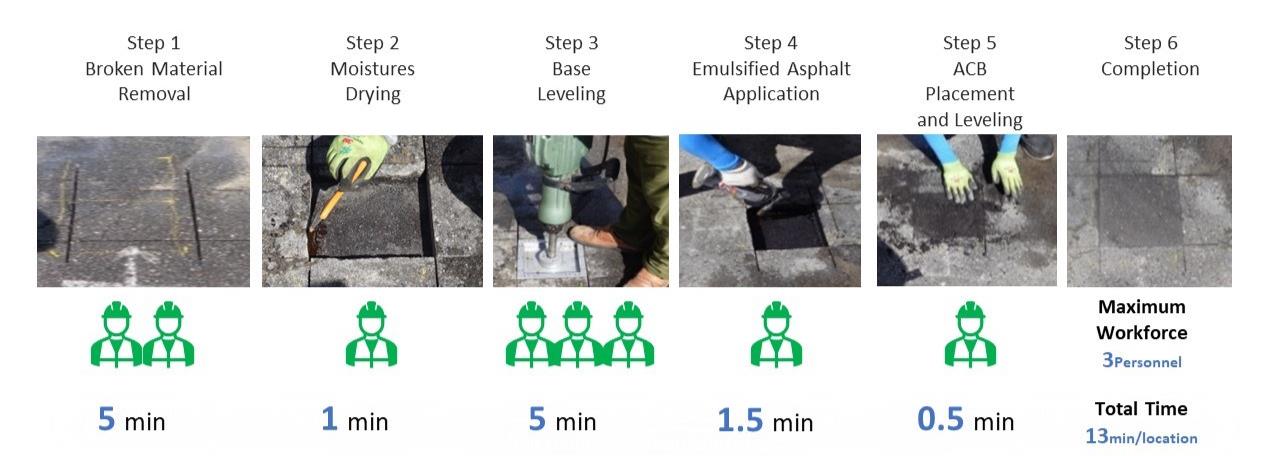 Picture6 Workflow of Conventional Manual Coring and Patching
Vehicle-Mounted and Automation Coring Equipment
It was developed firstly in 2022 and later unveiled the advanced edition in 2025. It improves limitations of the manual coring process and enables automation of coring and cleaning process before ACB installation .
Conventional methods of manual milling, core drilling, and pavement patching require substantial time and labor. The development of vehicle-mounted automated coring equipment integrates both automated milling and coring functionalities into a single mobile platform. Consequently, this significantly minimizes labor and time costs while enhancing the precision of asphalt pavement rehabilitation.
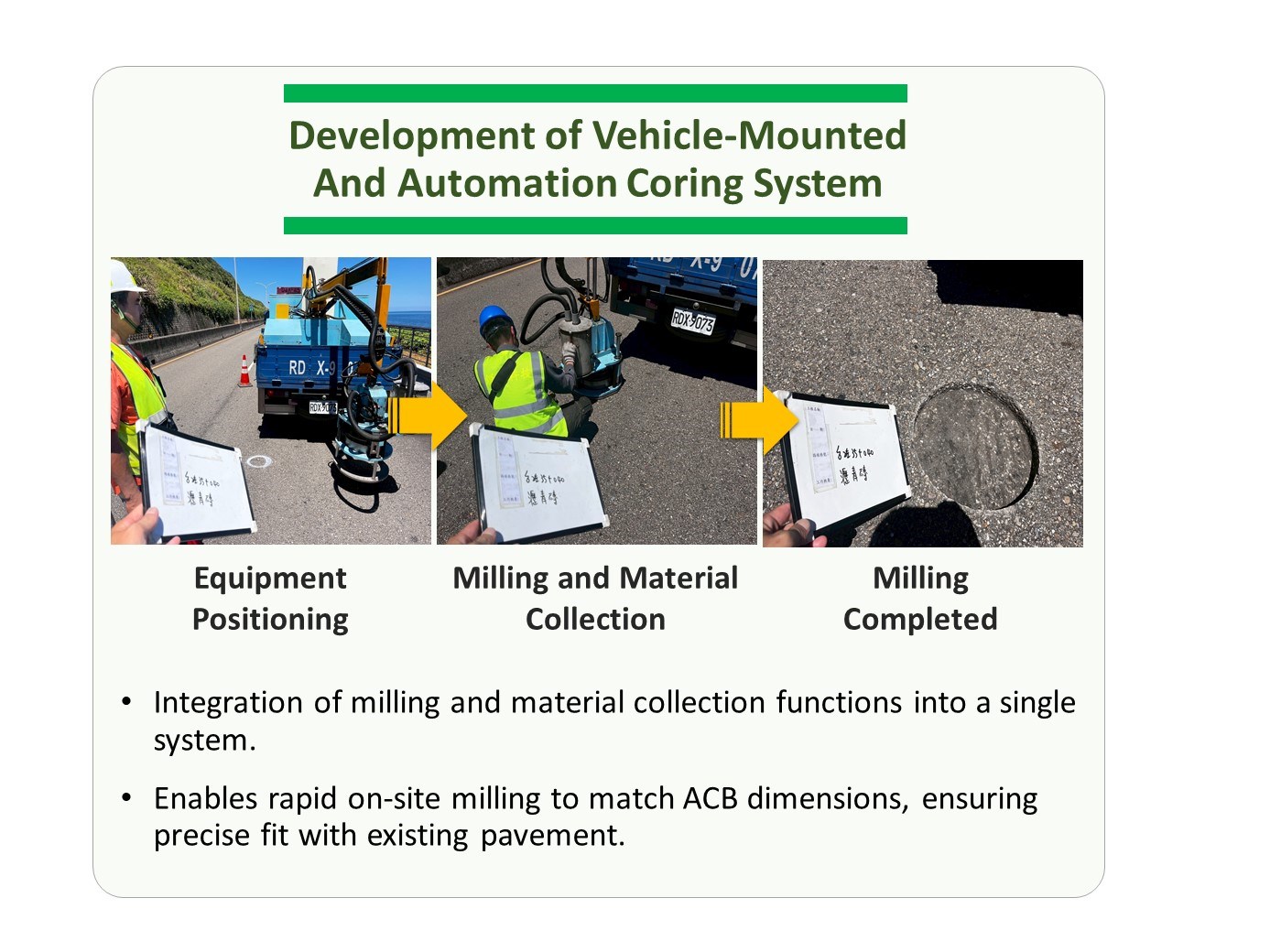 Picture7 Workflow of Vehicle-Mounted and Automation Coring Equipment
ACB Leveling with Improved Bonding Materials
Were assessed to speed up the installation process of ACB in the field. It reduced 1/3 of operation time and labor in comparison with the first generation of manual operation.
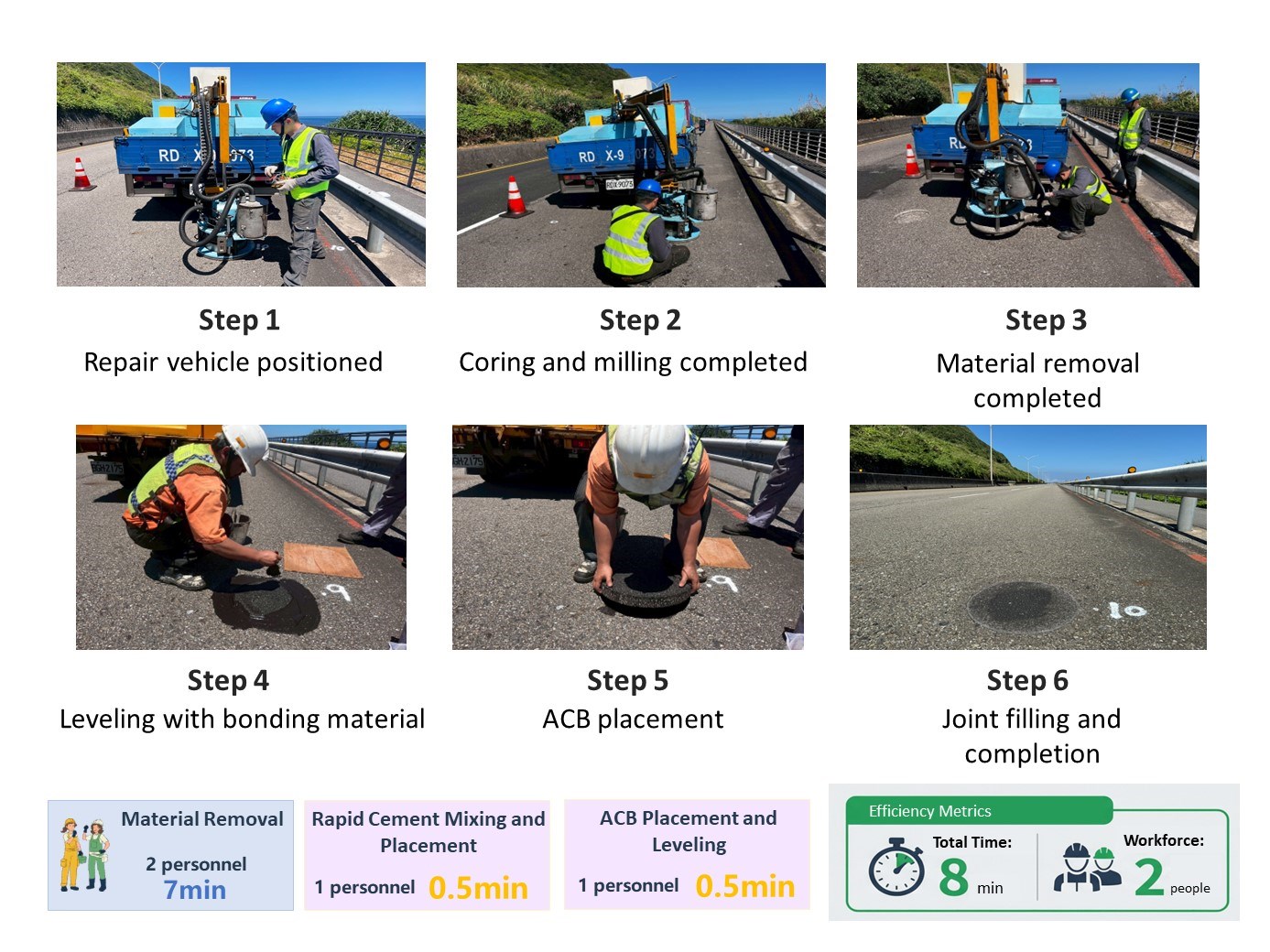 Picture 8 Installation process of ACBTHB evaluated the cases study concerning durability of M&R tasks, since 2024.
lCase study: Pilot field study on provincial highways with long-term performance tracking.
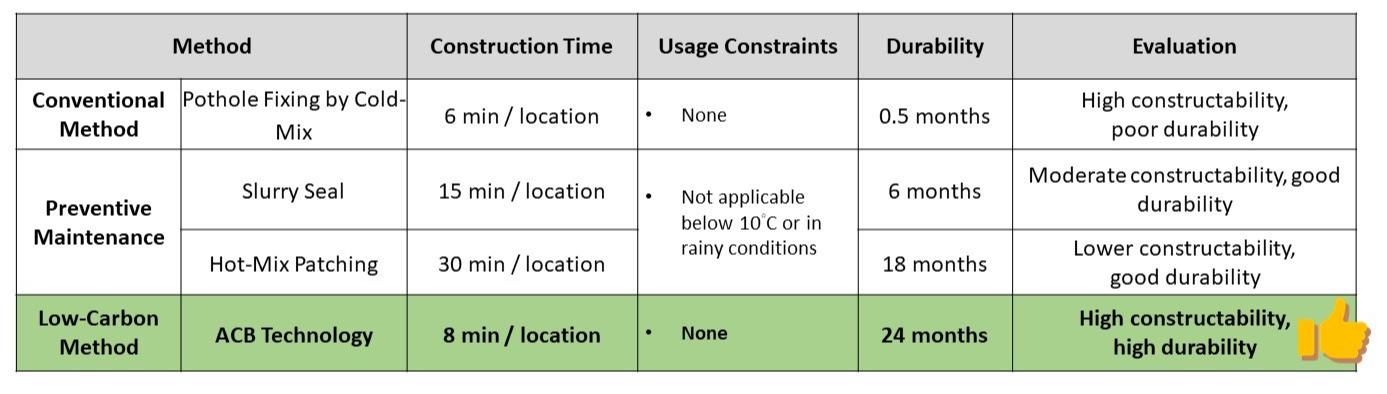
lTo ensure a fair evaluation, the performance comparison of the four repair methods (Pothole fixing with cold-mix, Slurry Seal, Hot-Mix Patching, ACB Technology) is based on a standardized patch size of 0.3 meters × 0.3 meters.
Table 2 Comparative Durability Analysis of Four Pavement Maintenance Options